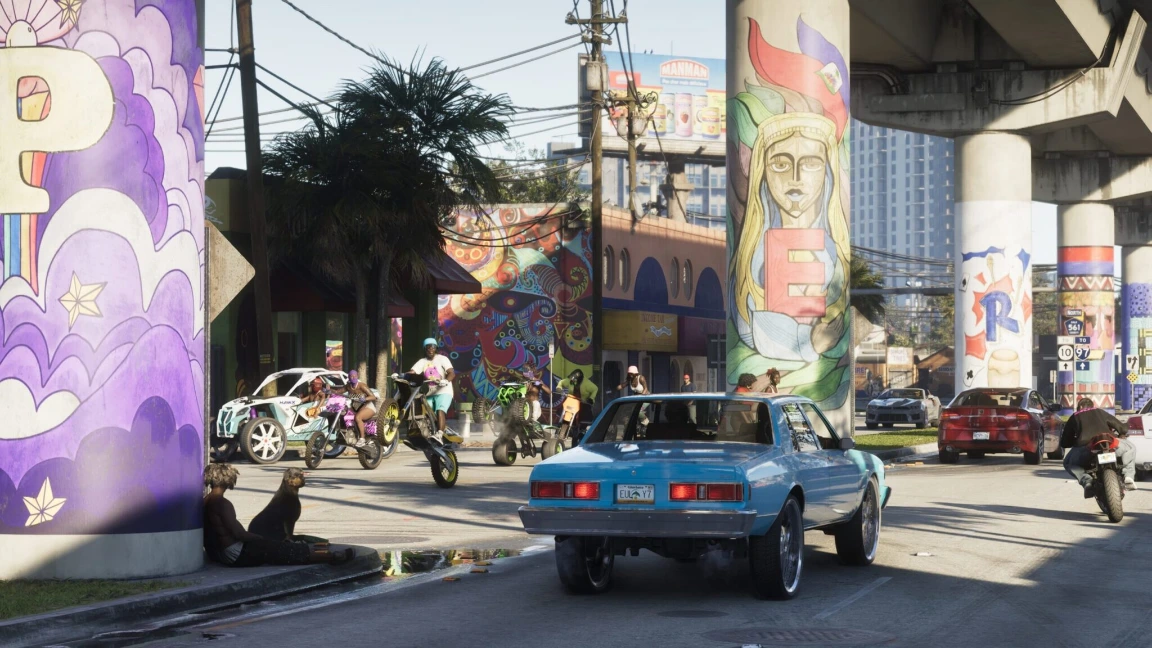
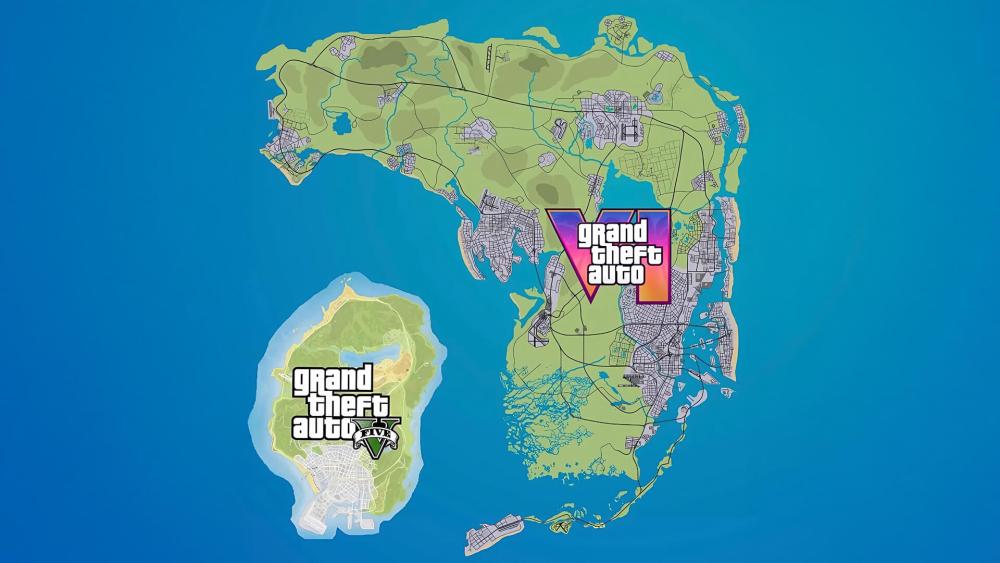
Rockstar Games has not published an official area or scale for Grand Theft Auto 6's world, so public estimates rely on trailer clips, fan reconstructions and occasional file-based telemetry. Discussion around map size intensified after a now-deleted retailer listing circulated online, with Brazilian stores including KaBuM briefly showing comparative details that were later edited or removed.
The studio confirmed the return to Vice City and described a map that extends beyond the city core into surrounding regions. Conversation about square-kilometer figures remains driven by community work rather than a verified Rockstar metric; early retailer pages contributed to the debate and were cited by trackers and outlets, including commentary gathered in listings from Brazilian retailers.
How fans and analysts estimate GTA 6's map scale
Researchers use repeatable methods to produce rough comparisons. Common techniques measure travel time between landmarks shown in trailers, scale known HUD elements and stitch multiple frames to form a bounding box of visible geography.
When builds leak, modders can read coordinate data or telemetry to produce more concrete figures. Those data-driven estimates are rare, so most public numbers come from visual analysis and community reconstructions.
What the KaBuM retailer listing showed and how it changed
One Brazilian retailer, KaBuM, briefly listed product pages that included comparative map details and platform notes. Screenshots and archived captures circulated after users noticed numeric comparisons and area suggestions in those pages.
Within hours to days some entries were edited or taken down, removing the comparative metrics. That sequence of publication, revision and deletion amplified online discussion, because copies of the original claims had already spread to forums and social media.
Practical techniques: speed, pixels and photogrammetry
A typical workflow begins by establishing a reliable reference, such as a vehicle with a known top speed. Observers time a traversal, account for camera cuts and convert elapsed time to distance under that assumed speed.
Photogrammetry-style methods align features from multiple frames using inferred camera parameters. Measuring on-screen minimap pixels also yields a pixel-to-world conversion when modders can identify a trustworthy scale element.
Why trailer-based and retailer-derived estimates can mislead
Trailers are edited and use cinematic camera rigs, both of which distort perspective and traversal time. Field of view, lens choices and scripted sequences complicate distance measurement from footage.
Retail listings and third-party pages can be removed or altered, and any numbers they show may reflect marketing, error or shorthand comparisons rather than actual playable area. That volatility is why archived screenshots and community notes matter, even when the original page is later changed.
Engine, streaming and platform choices shape perceived size
Map scale interacts with streaming architecture, memory budgets and draw distance. Developers can create a sense of vastness through aggressive streaming and lower asset density per tile, or via dense content in a smaller area.
Platform targets constrain how much seamless geography can be active at once. CPU threading, IO throughput and console memory limits affect trade-offs between long drives, points of interest and visible horizon depth.
Closing assessment
Retailer snapshots like the KaBuM pages changed the tone of the map-size debate by supplying concrete-seeming figures, but their edits and removals underscore why community estimates remain provisional. Only an official Rockstar measurement would resolve disagreements over raw square-kilometer numbers and let analysts calibrate density and streaming expectations.